The AC compressor is the heart of your vehicle’s cooling system, pressurizing refrigerant and circulating it through the entire air conditioning loop. When it fails, your car loses the ability to produce cold air, leaving you uncomfortable in hot weather. Understanding how the compressor works and why AC compressor failure happens helps you catch problems early and avoid more expensive repairs down the road.
Why Your Vehicle’s AC System Needs a Compressor
Air conditioning in your car doesn’t create cold air by blowing it into the cabin. Instead, it removes heat from the air already inside. The compressor drives this entire process by pressurizing refrigerant, which absorbs heat as it evaporates and releases it as it condenses. Without a working compressor, the refrigerant never moves, and the system produces no cooling effect.
The compressor sits at the front of the engine bay, driven by a belt connected to the engine crankshaft. When you turn on the AC, an electromagnetic clutch engages the compressor pulley, allowing it to spin and start pumping refrigerant. This on-demand engagement prevents unnecessary load on the engine when cooling isn’t needed.
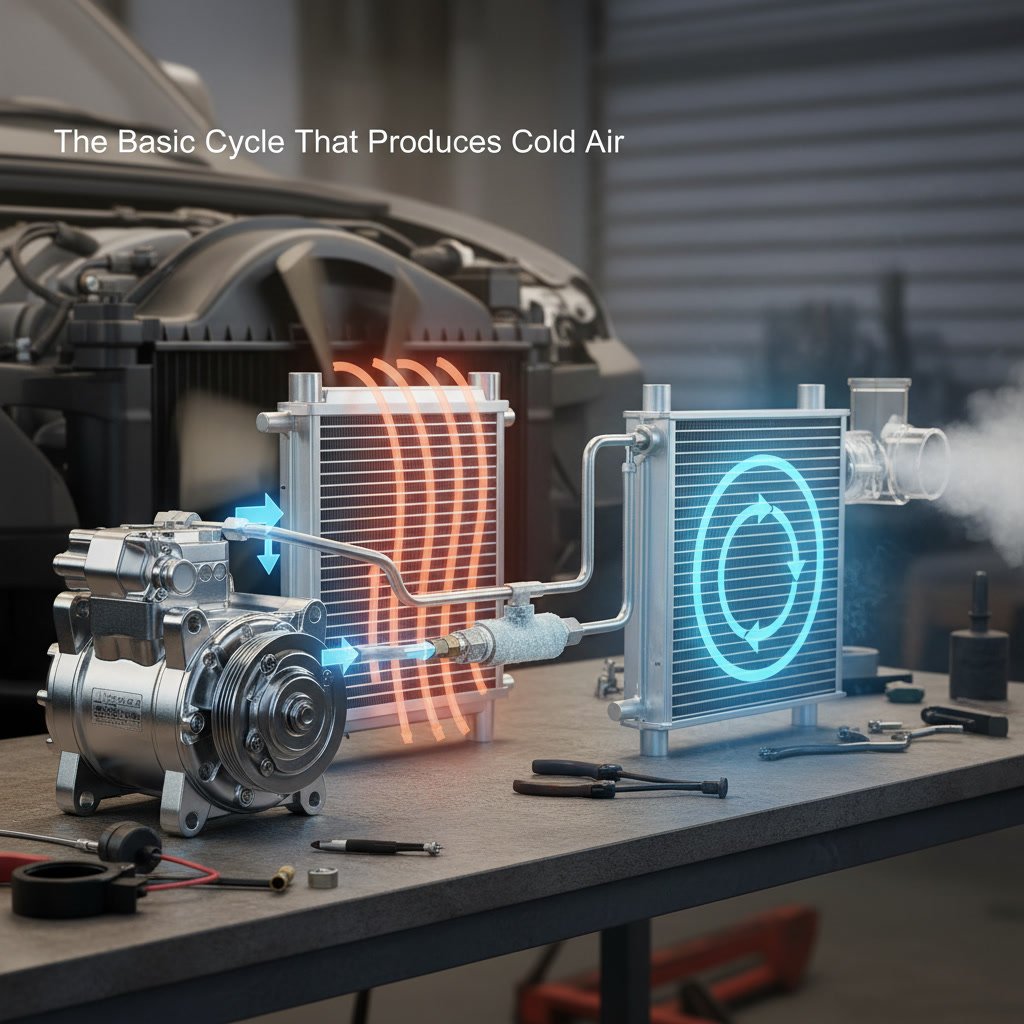
The Basic Cycle That Produces Cold Air
Your AC system operates as a closed loop. The compressor takes low-pressure refrigerant gas from the evaporator and compresses it into a high-pressure, high-temperature gas. This hot gas flows to the condenser, located in front of the radiator, where airflow and cooling fins help dissipate heat and convert the gas into a high-pressure liquid.
The liquid refrigerant then passes through an expansion valve or orifice tube, which creates a pressure drop. This sudden expansion causes the refrigerant to evaporate and cool dramatically. The cold refrigerant moves into the evaporator, which sits inside the dashboard. As cabin air blows across the evaporator fins, the refrigerant absorbs heat from the air, cooling it before it reaches the vents. The refrigerant, now warmed and in gas form again, returns to the compressor to repeat the cycle.
How the Compressor Moves and Pressurizes Refrigerant
Inside the compressor housing, pistons or scrolls physically compress the refrigerant gas. Most passenger vehicles use either a piston-style compressor with several small cylinders or a scroll compressor with spiral-shaped elements that trap and compress gas as they rotate. The compression process raises both the pressure and temperature of the refrigerant, preparing it for the heat exchange that happens in the condenser.
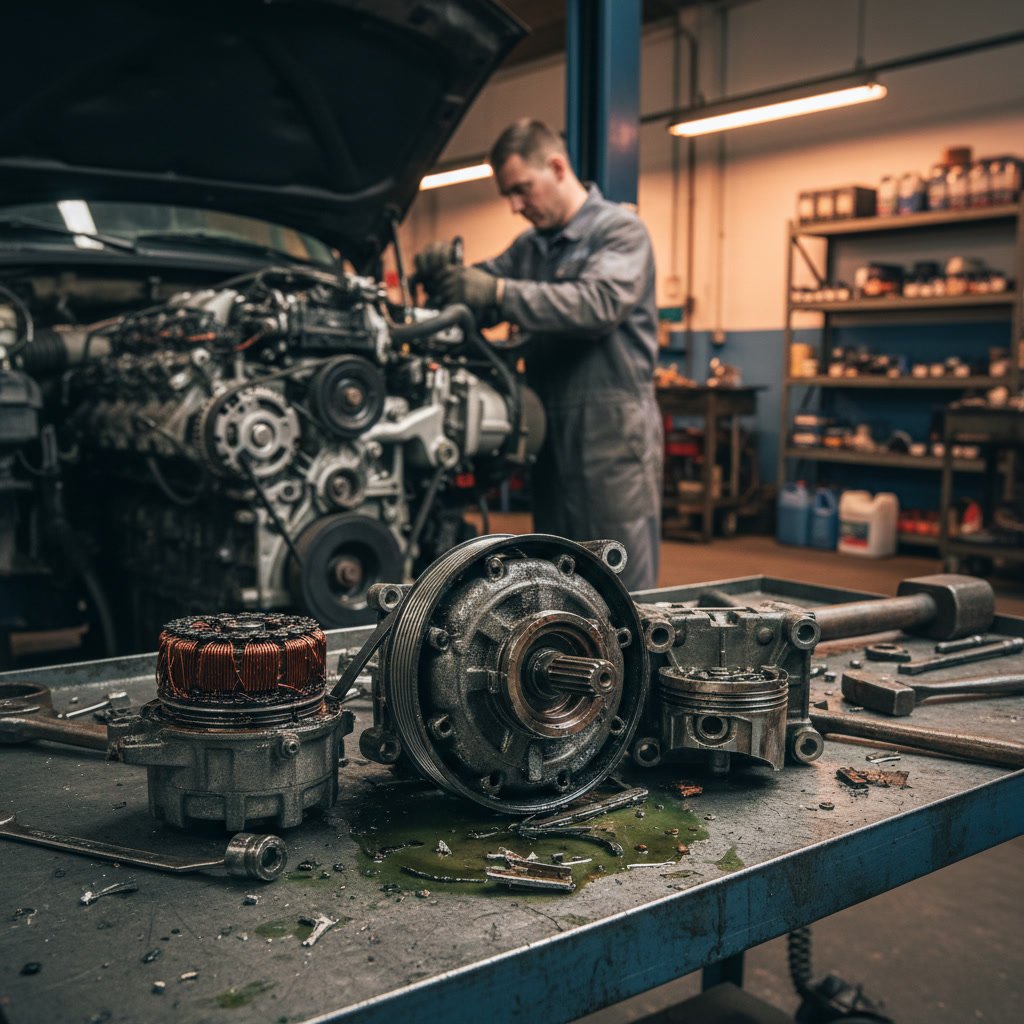
The internal seals and bearings inside the compressor must maintain tight tolerances to prevent refrigerant from leaking and to keep oil circulating properly. AC systems use a specific type of oil that mixes with the refrigerant to lubricate the compressor’s moving parts. If the oil level drops or becomes contaminated, internal components wear quickly.
Refrigerant Leaks and Low Charge Levels
One of the most common causes of compressor problems is low refrigerant. When the system charge drops below the minimum level, the compressor runs without enough lubrication. Refrigerant carries oil through the system, so a leak reduces both cooling capacity and oil circulation. Running a compressor on low refrigerant causes friction, overheating, and eventual seizure of internal components.
Leaks can develop at hose connections, at the compressor shaft seal, or through small cracks in metal lines. Environmental factors like road salt and debris accelerate corrosion. If you notice your AC blowing warm air or cycling on and off frequently, a leak may be drawing down the refrigerant charge. Addressing leaks early protects the compressor from damage and keeps repair costs lower.
Clutch Engagement Problems in San Marcos Heat
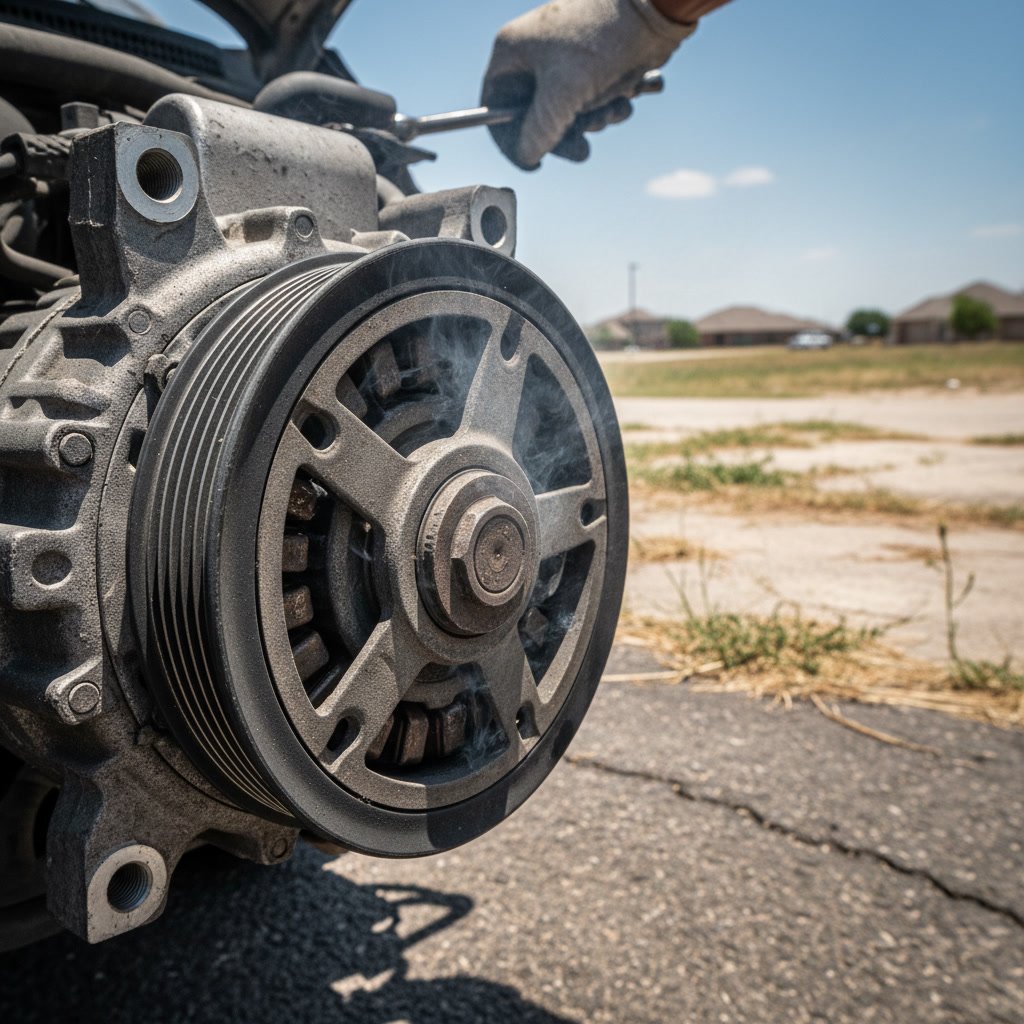
The electromagnetic clutch controls whether the compressor pulley engages with the compressor shaft. When the clutch receives power, it magnetically locks the pulley to the shaft, allowing the compressor to pump. Clutches fail from heat cycling, electrical issues, or worn friction surfaces. A failed clutch means the compressor never spins, even though the belt and pulley continue to rotate.
You can often hear a distinct click when the clutch engages. If that sound disappears or the compressor pulley spins but the center hub doesn’t, the clutch has likely failed. The gap between the clutch plate and the pulley must stay within a specific range. Too much gap prevents engagement, too little causes constant friction and premature wear.
Contamination From System Debris
When a compressor starts to fail internally, metal shavings and debris circulate through the AC system. These particles travel through hoses, the condenser, and the evaporator, embedding in narrow passages and damaging other components. If a compressor seizes completely, it releases large amounts of metal contamination that can clog the orifice tube or expansion valve.
Replacing a failed compressor without flushing the system or replacing the expansion device and receiver-drier leaves debris in place. This contamination quickly damages the new compressor, leading to another failure within months. Proper repair protocol requires flushing all lines, replacing the expansion component, and installing a new receiver-drier or accumulator to filter out remaining particles and moisture.
Electrical Faults That Prevent Operation
The compressor clutch relies on a signal from the AC control module and pressure switches. If a pressure switch detects refrigerant levels outside the safe range, it prevents the clutch from engaging to protect the compressor. Wiring problems, blown fuses, or a faulty relay can also interrupt power to the clutch coil.
Diagnosing electrical issues requires testing voltage at the clutch connector and verifying that pressure switches and relays send the correct signals. Sometimes a compressor appears to have failed when the real problem is a sensor or wiring fault. Proper diagnostics separate electrical issues from mechanical compressor damage, preventing unnecessary part replacement.
Belt and Bearing Wear Over Time
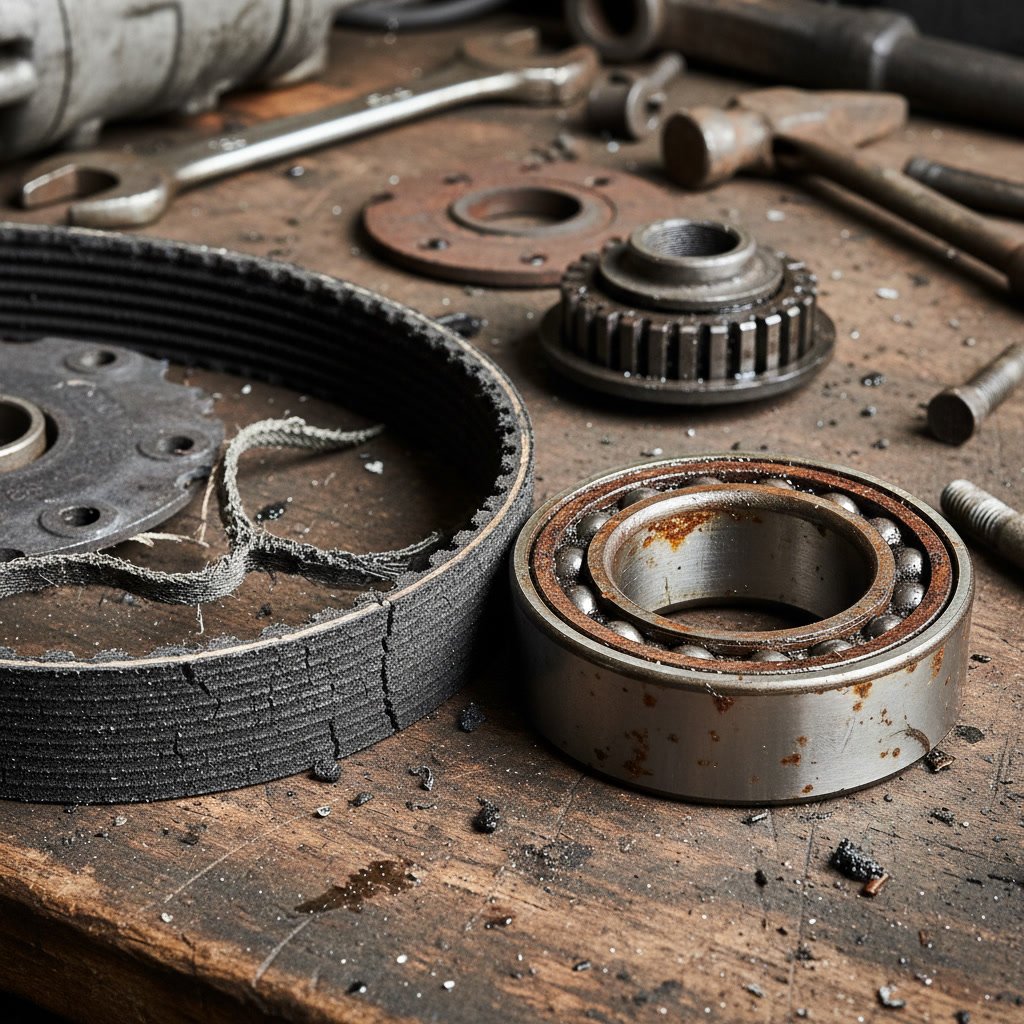
The compressor pulley spins whenever the engine runs, even when the AC is off. The bearing inside the pulley must support this constant rotation. When the bearing wears out, you’ll hear grinding, squealing, or rumbling noises from the front of the engine. A worn bearing can seize the pulley, stalling the accessory belt and disabling the alternator, power steering pump, and water pump.
Serpentine belt condition also affects compressor life. A loose or glazed belt slips under load, reducing compressor efficiency and generating heat. Regular preventative maintenance includes belt tension checks and replacement at manufacturer intervals. Catching belt wear early prevents damage to the compressor and other belt-driven accessories.
Internal Seal Failure and Oil Loss
The compressor shaft exits the housing through a seal that must contain high-pressure refrigerant and oil. Over time, heat and vibration degrade this seal, allowing refrigerant and oil to leak. You might see oily residue around the compressor body or shaft area. As oil escapes, internal lubrication drops and friction increases, accelerating wear on pistons, bearings, and cylinders.
Shaft seal leaks sometimes develop slowly, giving you time to schedule repairs before major damage occurs. Monitoring your AC performance and watching for oily spots under the vehicle helps catch these leaks early. Once the compressor loses enough oil, internal damage becomes irreversible, requiring full compressor replacement rather than a simple seal repair.
How Age and Mileage Affect Compressor Longevity
AC compressors typically last between 80,000 and 150,000 miles under normal conditions. Factors like climate, usage patterns, and maintenance history all influence lifespan. Vehicles in hot climates run the AC more frequently, accumulating more compressor cycles and heat exposure. Stop-and-go driving increases the number of clutch engagement cycles compared to highway driving.
Regular system inspections catch small issues before they escalate. Checking refrigerant charge annually, inspecting belts and hoses, and verifying that the condenser stays clean all extend compressor life. Similar to how diesel repair and maintenance requires attention to specific components and intervals, AC systems need consistent care to deliver reliable performance year after year.
Keeping Your Cooling System Running Reliably
Compressor problems develop from a combination of wear, contamination, and lack of lubrication. Catching refrigerant leaks early, replacing belts on schedule, and addressing strange noises immediately all help prevent expensive compressor replacement. Understanding the cycle and the role each component plays gives you the knowledge to recognize warning signs before you’re left without cold air in summer heat.
When your AC system shows signs of trouble, whether weak airflow, warm air, or unusual sounds, timely diagnosis protects the compressor and other components. APREMIER Auto Shops provides complete AC and heating repair services, including compressor replacement, leak detection, and system flushing. The team works with all makes and models, delivering transparent pricing and honest recommendations so you understand exactly what your vehicle needs. Reach out at +15126497598 to discuss your AC concerns and schedule an inspection.